The lesson wasn't about affordances. It was about how differently people remember the same design, and why that gap is the actual job.
 Muhammad Abdullah Ali


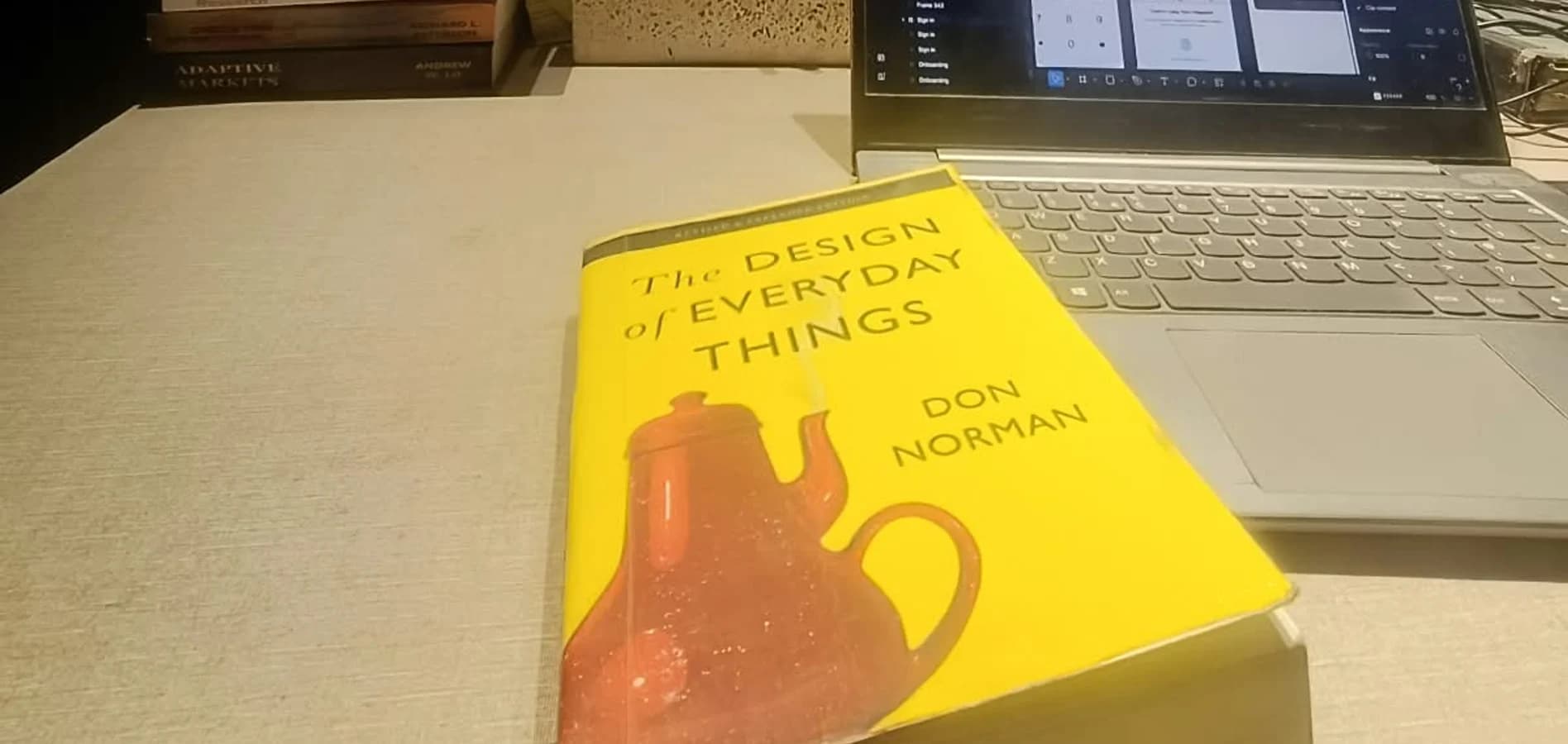
I got a chance to read “Design of Everyday Things” in late 2024, and its truly a book I would recommend to all designers out there. Here, I just want to share something which really gave me a new perspective, knowledge, and usability lesson. Don Norman splits how we process a design into three levels: visceral, behavioral, and reflective. The first two are fast and they fade. The third is slow, conscious, and it's the one that decides whether someone tells a friend about your product a year later. That's reflective memory, and it taught me more about design than any Figma tutorial has.
Visceral is the flinch. Behavioral is whether the thing worked while you were using it. Reflective is what you decide it meant, after the fact, once you've had time to build a story around it. Norman's actual point, the one that rearranged something in my head, is that reflective memory usually outweighs what actually happened. Not because people are lying to themselves. Because memory was never a recording. It was always an edit, a self-construct.
Norman's own examples in the book are things as small as doors and thermostats, not global events. But once I actually understood the idea, I couldn't stop testing it against something bigger.
Take 2020, a year that handed almost everyone the same headlines and the same four walls. Nobody remembers it evenly. Some people remember stillness and self-examination. Some people remember loss. Same twelve months, same events, completely different reflective memory, because everyone walked into it carrying something different.
Reflective Memory Is Never Neutral
That's the part I hadn't sat with before. I used to think good design meant getting the visceral and behavioral levels right and the rest would follow. Clean interface, fast interaction, done. But it seems it doesn’t work like that. Hundreds of competitive products out there which might also be fulfilling for these two form of memories. But, reflective memory doesn't average out across your users. It gets built individually, out of whatever mental state, context, and history someone happened to bring into contact with your product that day.
There's no universal user sitting behind a design system. There are millions of actual people, and a decent number of them are having a harder day than the persona doc accounted for. Someone stressed reads an error message differently than someone relaxed. Someone grieving remembers a clumsy onboarding flow completely differently than someone who was just mildly curious. The interface didn't change. The person carrying it away did.
Design isn't judged by what happened. It's judged by what someone decides happened, afterward, alone.
So the shift for me wasn't stylistic. It was about who I'm actually designing for when nobody's watching the screen with me. I got more careful with tone in error states. I stopped assuming the happy path is the only path worth writing copy for. I started asking, before shipping something, not just does this work, but what is someone in a bad mental state going to walk away remembering about this. That’s the time when I started to research platforms like Duolingo or Instagram, or Binance more deeply.
That's the real lesson. Not affordances, not signifiers, not the kettle on the cover. Reading that book taught me there are people out there living entirely different lives than mine, carrying problems and mental states I'll never fully see from a dashboard of analytics, and the decent version of this job takes that seriously instead of designing for whoever's easiest to imagine.